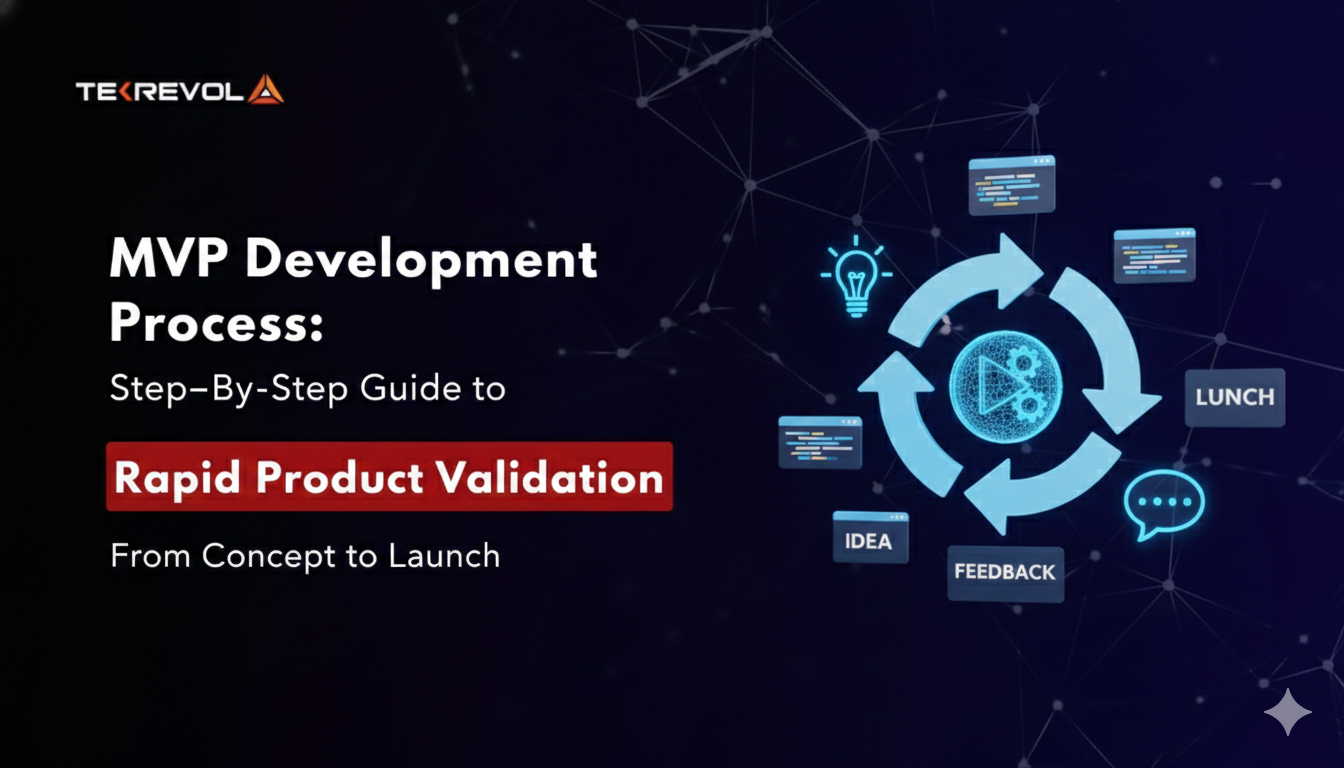
You want to build something that proves demand fast and costs less. The MVP development process guides your team through clear mvp stages so you can choose the right mvp features, test assumptions, and collect real user feedback before spending more time or money. A well-planned minimum viable product gives you quick validation: it shows whether people will use your idea and which features matter most.
Follow a simple flow that covers discovery and planning, prototyping, agile development, mvp testing, and rapid iteration. Your mvp development team learns from each test and refines the product so you move from validation to a scalable roadmap with lower risk.
Key Takeaways
- Start small to validate demand and pick the right features.
- Use iterative agile steps to test, learn, and improve quickly.
- Turn early feedback into a clear plan for scaling beyond the MVP.
Understanding MVP Development Process
This section explains what an MVP is, the principles that guide the mvp process, and the benefits you get from using an MVP approach. Read on to learn how to pick core mvp features, set up an mvp development team, and run mvp testing and validation.
Definition of MVP
A minimum viable product is the smallest version of your product that delivers value and lets you test assumptions with real users. You build only the core features that solve the main user problem, not every wish-list item.
Focus your MVP on one clear outcome — for example: let users create an account, add one item, and complete checkout. That narrows development effort and speeds up feedback. Types of MVP include a landing-page test, Concierge MVP, Wizard of Oz, and a functional prototype. Each type fits different goals: user interest, feature validation, or usability testing.
Your team should plan mvp stages: define hypotheses, build core features, run mvp testing, collect metrics, and iterate. Use agile or scrum practices so you can deliver fast and change based on what the market tells you.
If you’re new to MVP planning, you can follow our complete guide to mvp development to understand how to structure validation and iteration.
Core Principles of MVP
Keep scope minimal. Choose features that directly test your riskiest assumptions. Use a short list of measurable success criteria so you know when validation succeeds or fails.
Move fast. Break work into short sprints under an agile minimum viable product or minimum viable product scrum framework. That lets your mvp development team release quickly, run minimum viable testing, and respond to user feedback without heavy rework.
Learn from real users. Prioritize mvp testing methods like A/B tests, usability sessions, and analytics. Treat each user interaction as data for mvp assessment. Validate or falsify hypotheses, then pivot or scale features based on evidence.
Control cost and risk. By limiting scope and using staged delivery, you avoid large sunk costs and expensive pivots later.
Benefits of MVP Approach
You reduce waste by building only the features that matter. That lowers initial development cost and shortens time to market.
You gather real user feedback fast. Early mvp validation shows whether users adopt, engage, and pay for your core value. This helps you prioritize the roadmap with confidence.
You attract stakeholders sooner. A working MVP can help you secure investment or buy-in because it demonstrates traction and clear metrics. It also clarifies what your full product will need.
You improve product-market fit. Repeated cycles of mvp testing and iteration refine the experience. Over time, the data-driven process increases the chance your product solves a real user need.
You can explore real-world validation approaches in these mvp development examples to see how companies tested ideas before scaling.
Discovery and Planning Phase
This phase sets the foundation for your MVP process. You will map who will use the product, test core assumptions with real data, and set clear measures that tell you if the MVP works.
Identifying Target Audience
You must define the exact users who will benefit most from your MVP features. Create 2–4 user personas that include age, job role, daily tasks, pain points, and where they currently solve the problem. Use short interviews, customer support logs, and analytics to validate these personas.
Prioritize personas by business value and likelihood to adopt. Mark one persona as your primary user; design the core flows and MVP features around them. Share these personas with your MVP development team so designers and engineers focus on real user needs.
Use a simple table to compare personas:
- Persona name | Primary goal | Key pain | Adoption likelihood
- Example: “Freelancer” | Invoice faster | Time lost on billing | High
This keeps scope tight and guides feature selection during the next mvp stages.
Market Research and Validation
Collect evidence that your idea solves a real problem before you build. Run 5–10 quick interviews, a short landing page test, or a paid ad test to measure click-through and signup rates. Track conversion numbers and qualitative notes.
Segment competitor features into a shortlist of must-have and nice-to-have items for your minimum viable product. Use that list to decide types of MVP you might build — clickable prototype, concierge MVP, or single-feature app. Choose the format that gives fastest mvp testing and validation for your context.
Log all results in a one-page research brief. Include sample size, conversion metrics, direct quotes, and a decision: move forward, pivot, or stop. This brief helps your team and stakeholders perform an objective mvp assessment.
Defining Success Metrics
Pick 3–6 measurable metrics tied to user behavior and business goals. Typical choices: activation rate (first key action), 7-day retention, task completion time, and conversion to paid plan. Keep metrics simple and directly tied to your MVP features.
Set numeric targets and a testing timeline. Example: “20% of signups complete onboarding within 7 days” or “5% of beta users convert to paid in 30 days.” Assign metric owners from your mvp development team who will track results and run minimum viable testing methods.
Plan to run regular metric reviews during your sprint cycles or scrum ceremonies. Use these reviews to decide whether to iterate features, expand testing, or scale development into the next mvp stages.
Feature Prioritization and Roadmapping
You will pick features that validate the core idea fast and plan the next builds so your team focuses on learning, not polishing. Prioritize by impact on user outcomes, development effort, and how each feature supports testing and validation.
Essential vs. Nice-to-Have Features
Start with a short list of features that prove the product solves the main problem. Ask: which feature enables a user to complete the core task? Score each candidate on three axes — user value, implementation cost, and validation potential — using a simple 1–5 scale. Multiply scores to rank features.
Use a small table to compare features:
- Feature — User Value — Cost — Validation Score — Rank
- Core flow — 5 — 3 — 5 — High
- Social sharing — 2 — 2 — 1 — Low
Keep the MVP features set tight. Drop anything that doesn’t immediately test a key assumption. This helps your mvp development team move through mvp stages faster, reduces risk during mvp testing, and keeps the minimum viable product agile or aligned with minimum viable product scrum practices.
Creating a Product Roadmap
Map releases to learning goals, not feature lists. For each release, write one validation question (e.g., “Will users complete checkout in under 3 minutes?”). Link that question to the mvp testing methods you’ll use: A/B tests, usability sessions, or analytics funnels.
Structure the roadmap into three short horizons: Launch (first 4–8 weeks), Iterate (next 3 months), and Scale (3–12 months). For each horizon list: objectives, must-have mvp features, owner, and success metric. Example:
- Launch — Validate signup conversion — Email auth, onboarding flow — PM — 20% signup rate
- Iterate — Improve retention — Push reminders, basic personalization — Dev — 30-day retention +10%
Review the roadmap each sprint with your agile minimum viable product process or scrum ceremonies. Use mvp assessment checkpoints after each release to decide build, measure, or pivot.
Design and Prototyping
Design and prototyping turn your product idea into a testable interface and clear flows. Focus on the user tasks you must validate, the smallest set of screens to test those tasks, and a quick prototype you can use in mvp testing and mvp validation.
User Experience Design
You map the user’s core journey first. Identify the primary task you want users to complete (sign up, buy, book, or share). For each step, list user goals, decisions, and possible errors. This keeps your mvp features focused on what drives value.
Create simple personas based on real research or early interviews. Use those personas to prioritize screens and interactions. Keep copy concise and buttons clear; reduce choices to avoid confusion.
Work with your mvp development team to align UX with technical limits and sprint goals. Use usability tests during the mvp stages to watch users complete tasks. Note friction points for the next sprint in your minimum viable product agile or scrum board.
Wireframing MVP Features
Start with low-fidelity wireframes that show structure, not styling. Draw the main screens that support the core flow. Annotate each wireframe with the specific mvp features it proves and the acceptance criteria for mvp assessment.
Turn important screens into a clickable prototype for rapid testing. Use tools that let you change content fast so developers and designers can iterate within the mvp process. Link prototype tasks to mvp testing methods like task completion rate and time-on-task.
Prioritize features using a simple table: Feature | Purpose | Test Metric | Priority. This helps you decide which types of mvp to build (concierge, prototype, or landing-page MVP) and keeps the team focused on measurable validation.
Technical Specification and Architecture
Choose clear technical requirements and an architecture that match your goals, budget, and timeline. Focus on tools and patterns that let your MVP process move fast, let your MVP testing be repeatable, and keep the MVP features easy to change as you gather validation.
Selecting Tech Stack
Pick languages, frameworks, and services that your mvp development team already knows well. That lowers risk and speeds up the mvp stages. For web apps, common combos: React + Node.js + PostgreSQL or Vue + NestJS + MySQL. For mobile, choose React Native or Flutter to cover both platforms with one codebase.
Evaluate these factors:
- Time to market: prefer libraries with strong templates and third-party SDKs.
- Operational cost: use managed services (hosted DB, auth) to cut ops work.
- Scalability: start with modular components so you can refactor later.
- Testability: select tools that support unit and integration tests for minimum viable testing.
Document chosen versions, CI/CD steps, and required environments in a short spec so your minimum viable product scrum or agile process can begin without guesswork.
Defining System Architecture
Design one that supports quick changes during mvp validation and mvp testing. Use a simple layered layout: UI, API, service layer, and data store. Keep services small and focused to make mvp assessment and updates easier.
Use these patterns:
- Monolith first, split later: deploy a single codebase to speed early development.
- API contracts: define REST/GraphQL schemas and authentication flows up front.
- Data model v1: keep schemas minimal; version changes in migrations.
- Observability: add basic logging, error tracking, and request tracing.
Include an architecture diagram, the deployment flow (CI/CD), and a rollback plan. This helps your mvp development team run agile minimum viable product sprints, test features, and iterate based on real user feedback without major rework.
Agile MVP Development
You will run short, focused cycles that deliver the smallest usable feature set and test real user value quickly. This approach helps you validate assumptions, prioritize MVP features, and adapt the mvp process based on real feedback.
Setting Up Development Sprints
Define sprint length (usually 1–3 weeks) and pick a clear sprint goal tied to an MVP stage, such as user signup flow or core search function. Create a sprint backlog from prioritized user stories that map to essential mvp features. Limit scope to the smallest work that proves value.
Assign roles: product owner to decide which features move forward, scrum master to remove blockers, and your mvp development team to build and test. Include at least one designer and one QA in each sprint for rapid mvp testing and validation.
Use a simple DoD (Definition of Done) that includes code, unit tests, and a user-facing demo. Hold sprint planning, daily standups, a demo, and a short retrospective. Track velocity to plan future sprints and adjust your mvp assessment criteria.
Iterative Development Approach
Break the minimum viable product agile work into small increments that you can release or test often. Each increment should focus on a single hypothesis—like whether users complete onboarding—and include acceptance criteria and mvp testing methods.
Adopt continuous feedback loops: deploy a build, run targeted usability tests or A/B tests, gather metrics (completion rate, retention, error rates), and run a quick mvp validation session with users. Use the data to decide whether to persevere, pivot, or stop development on that feature.
Keep iterations tight and predictable. Use feature toggles to ship unfinished work safely. Maintain a prioritized backlog of types of MVP and ideas for the next increments so you can move from one mvp stage to the next with clear evidence.
Testing and Quality Assurance
You need a focused QA approach that fits your mvp process and the mvp stages you plan to run. Prioritize the core mvp features, decide which tests block release, and set quick feedback loops with your mvp development team.
MVP Testing Types
List the tests you must run and why each matters for mvp validation:
- Smoke tests — Verify basic app startup and key flows (signup, core feature). Run after each build to catch show-stoppers fast.
- Functional tests — Check each mvp feature against acceptance criteria. Use manual tests for new flows and automated tests for repeatable checks.
- Usability tests — Watch real users complete tasks. Note friction points and unclear UI elements that hurt adoption.
- Performance checks — Measure load times and key transactions for expected user counts. Focus on slow pages or API calls used by core features.
- Regression tests — Re-run critical tests after changes. Automate the highest-value regression cases to save time.
- Security and data checks — Validate auth, data privacy, and input handling for obvious attack paths.
Decide which types you run at each mvp stage. Early stages rely more on manual functional and usability tests; later stages add automation and performance as scale matters.
Gathering User Feedback
Collect feedback that ties directly to mvp assessment and future sprint plans.
- Use in-app prompts, short surveys, and session recordings to capture immediate reactions to mvp features.
- Run structured interviews with target users to probe how the product fits workflows and what value it delivers.
- Track quantitative metrics: activation rate, task completion, churn, and key event funnels tied to your core feature.
- Prioritize bugs and feature requests by impact on validation: does the item block users from proving the business hypothesis?
- Feed findings into your agile minimum viable product workflow and sprint backlog. Share clear reproduction steps and acceptance criteria with the mvp development team so fixes and experiments move quickly.
Keep feedback cycles short. Validate changes with small A/B tests or prototypes before committing to larger development work.
Launch and Early User Acquisition
You will finalize technical readiness, pick channels to reach target users, and set clear metrics to measure traction. Focus on launch logistics, user onboarding, and a shortlist of low-cost acquisition tactics that match your audience.
Preparing for MVP Launch
Confirm the MVP testing results and fix critical bugs found during mvp testing and minimum viable testing. Create a launch checklist that includes deployment steps, rollback plan, and who on the mvp development team owns each task. Run one final mvp assessment to verify core mvp features work under load and that analytics events fire for key actions.
Prepare user onboarding flows and short help content. Build simple in-app prompts and an email welcome series that direct users to the primary action you want measured. Assign customer support coverage for the first 7–14 days and prepare a feedback capture form for mvp validation.
Use a launch control room (chat or video) to coordinate on launch day. Track real-time metrics like activation rate, daily active users, and conversion to paid if applicable.
Initial Marketing Strategies
Start with targeted, low-cost channels that match your buyer persona and product type. Use content and community: post in two relevant forums, publish one landing page optimized for a clear value prop, and share short demo clips on social. Run a lightweight paid test with narrow targeting (small budget, 5–7 days) to measure cost per signup.
Leverage partnerships and seed users: ask early testers for referrals, offer limited invites, and work with one influencer or niche blog for an authentic mention. Use email outreach to pre-launch signups and a short drip to convert them.
Measure each tactic against your core metric (activation, retention, or revenue). Use A/B tests for headlines, onboarding steps, and call-to-action buttons to learn fast. Keep campaigns small, track CPA and LTV signals, then scale what shows clear mvp validation.
Analyzing Results and Iteration
You need clear metrics and fast feedback loops to decide what to keep, change, or drop. Use data from real users and structured feedback from your MVP testing to guide your next steps.
Measuring MVP Performance
Decide on 3–6 key metrics before you launch. Focus on metrics tied to your core value: activation rate, task completion, retention at day 7, and conversion to paid plans. Track those with analytics tools (e.g., Google Analytics, Mixpanel) and instrument events for specific MVP features like onboarding or checkout.
Use a simple table to keep tests clear:
| Metric | Target | Tool |
|---|---|---|
| Activation rate | 20% | Mixpanel |
| Day-7 retention | 15% | Firebase |
| Feature usage (X) | 30% | Segment |
Run A/B tests for changes that affect the funnel. For technical teams using Scrum or Agile, map metric work into sprints and include the MVP development team in sprint reviews. Reassess metrics every sprint and archive any that no longer map to your product hypothesis.
Incorporating Feedback
Collect structured and unstructured feedback. Use in-app surveys, session recordings, support tickets, and short user interviews focused on specific mvp features. Prioritize feedback that matches your mvp validation goals and aligns with one of the mvp stages: discovery, build, launch, or iterate.
Triage incoming items with a simple prioritization matrix:
- Urgent + high impact: fix in next sprint
- High impact + non-urgent: schedule roadmap
- Low impact + high effort: drop or test later
Assign owners on the mvp development team for each item. Close the loop with users by confirming you acted on their input. That practice improves trust and gives clearer signals during minimum viable testing and ongoing mvp assessment.
Scaling Beyond MVP
When you decide to scale beyond the MVP, focus on validated signals from your mvp testing and mvp validation. Use feedback, usage data, and retention to judge whether your mvp features solve a real problem. If they do, you can plan the next mvp stages toward a Minimum Marketable Product.
Build your team for scale. Expand the mvp development team with roles for product management, reliability, and growth. Keep some agile practices — treat the transition as part of the mvp process and keep short iterations like in minimum viable product agile or minimum viable product scrum.
Revise architecture and tech choices to handle more users. Prioritize scalability, observability, and automated tests. Include mvp testing methods such as load tests and automated regression to reduce risk during growth.
Use a checklist to guide decisions:
- Product: clear value proposition and prioritized mvp features.
- Market: repeatable acquisition and healthy unit economics.
- Tech: resilient systems and deployment automation.
- Team: cross-functional skills and ownership.
Assess risks through mvp assessment milestones. Decide which types of mvp served you well and which need replacement. Keep using minimum viable testing to validate new ideas before heavy investment.
When you scale, keep iterations short and measurable. Maintain your agile minimum viable product mindset: test, learn, and adapt as you move from prototype to a market-ready product.
Common Challenges in MVP Development
You will face predictable hurdles that slow the mvp process and risk wasted time or budget. The two biggest problems are adding too much scope and not having enough resources on your mvp development team.
Scope Creep
Scope creep happens when new features get added after you define your mvp features. You may start with a clear list for early mvp stages, but stakeholders often ask for extras. Each extra feature raises development time, testing needs, and the chance of bugs during mvp testing.
Control scope by using a simple prioritization table:
- Must-have: core functionality for mvp validation
- Nice-to-have: defer to later mvp stages
- Backlog: log ideas for post-launch
Use time-boxed sprints in a minimum viable product agile or minimum viable product scrum setup. Require a short change review before any addition to the sprint. This keeps your mvp assessment focused on the smallest set of features that proves value.
Resource Constraints
Limited budget, a small mvp development team, or lack of specific skills can stall progress. You might not have both front-end and back-end developers, designers, and QA needed for reliable mvp testing. That gap creates delays and lowers release quality.
Mitigate resource risks by splitting work across types of mvp: build a landing-page or concierge MVP to validate demand before coding. Outsource specific tasks like security reviews or automated tests through professional MVP development services to accelerate delivery without increasing internal workload. Use minimum viable testing methods—manual test scripts for early builds and automated suites as you scale. Track capacity in a simple weekly board so you can reassign tasks and avoid bottlenecks.
Best Practices for MVP Success
Focus on the core MVP features first. Choose only the functionality that proves your idea and supports mvp validation. Keep scope small to speed up the mvp process and reduce risk.
Use an iterative approach and involve users early. Run mvp testing with real users, collect feedback, and repeat quick cycles. This mirrors minimum viable product agile and minimum viable product scrum methods.
Assemble the right mvp development team. Include a product owner, a designer, and engineers who can move fast. Add a tester for continuous mvp testing methods and someone to handle mvp assessment and analytics.
Define clear success metrics before you build. Decide what counts as validation: retention, conversion, or task completion. Track those metrics during each of the mvp stages to guide decisions.
Test different types of mvp to learn faster. Try a concierge or smoke-test MVP, a landing-page MVP, or a prototype. Use minimum viable testing techniques to compare results and choose the best path.
Prioritize communication and documentation. Keep sprint goals clear and record feedback from users and stakeholders. This keeps your agile minimum viable product aligned with business goals.
Fail fast, learn faster. Treat each release as an experiment, not a final product. Use findings from mvp validation to refine features, scale the product, or pivot when needed.