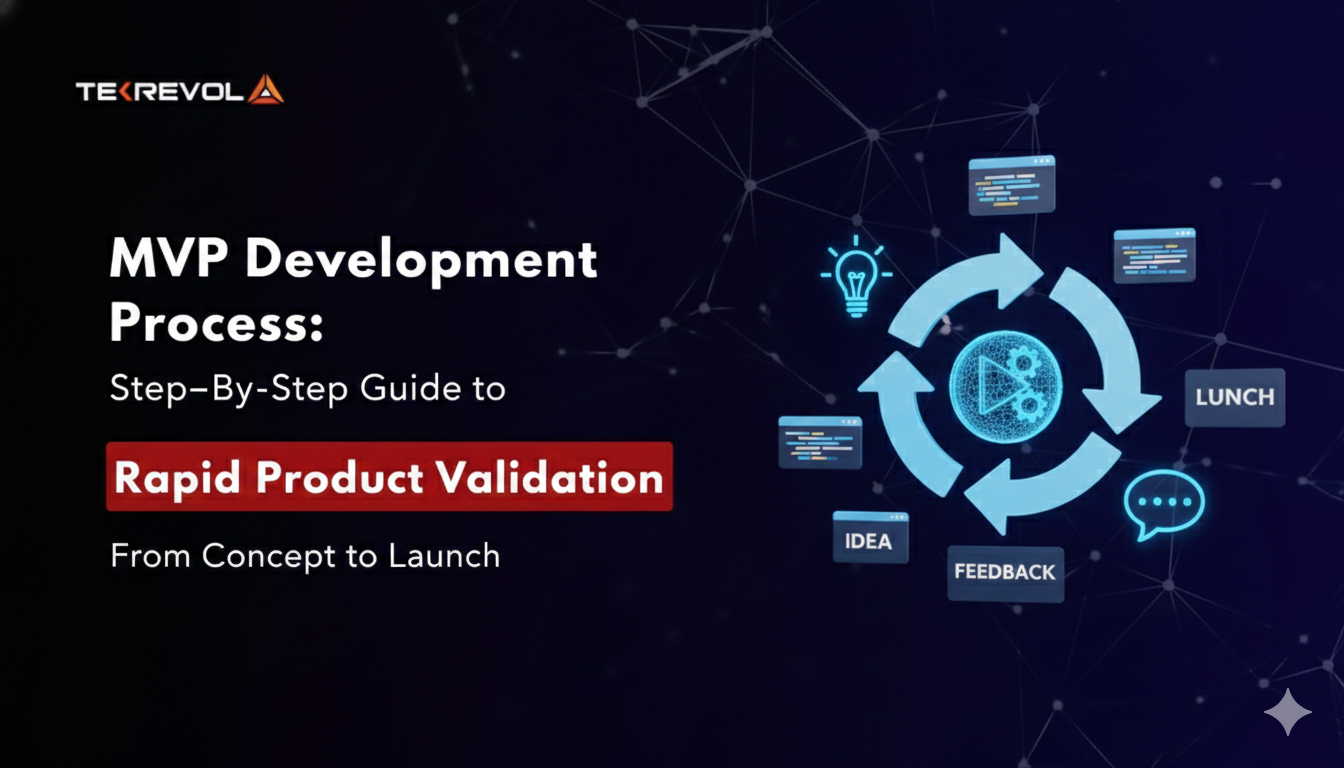

You want to test a product idea without wasting time or money. An MVP gives you a simple, usable version that proves whether people will actually use and pay for your core solution.
Build the smallest thing that solves the main problem, get feedback quickly, and use that learning to improve or pivot. This approach stops guesswork and focuses your effort on what matters most.
Startups and teams use different MVP types and steps to validate ideas fast and cheaply, so you can learn real customer needs before you scale. Follow clear steps, avoid common mistakes, and prioritize the right features to make every development dollar count.
Key Takeaways
- Validate your core idea quickly with a basic, usable product.
- Use feedback to guide improvements or change direction.
- Prioritize features that solve the main customer problem.
What Is a Minimum Viable Product (MVP)?
A minimum viable product (MVP) is the simplest working version of your idea that still delivers real value to users. It includes only the core features needed to solve a key problem and nothing extra.
You build an MVP to learn. By releasing a basic product, you can test assumptions, collect user feedback, and see if people actually want what you plan to offer. This lowers cost and risk compared with building a full product up front.
Think of an MVP as an experiment with customers. You measure how users act, which features matter, and what to improve next. Use that data to decide whether to iterate, pivot, or stop.
Common MVP forms include:
- Landing pages to test interest.
- Prototypes to show workflows.
- Small feature sets inside an app for early adopters.
Benefits you get from an MVP:
- Faster time to market.
- Clearer product direction from real user data.
- Lower initial development cost.
An MVP is not a final product or a rough demo. It must be usable and solve a real need. Your goal is to learn quickly and build the right thing, not to impress with scope or polish.
Why MVP Development Matters
An MVP helps you test a real idea fast. You build only the key feature that solves one clear user problem, then watch how people use it.
You learn from real users, not guesses. Their feedback shows what matters, so you avoid costly features nobody needs.
MVPs lower risk and save money. By spending less up front, you keep funds for the changes that actually grow the product.
You move faster to market and gather data you can trust. That data guides product choices and helps you prioritize the next steps.
Benefits at a glance:
- Faster learning: Validate assumptions quickly.
- Cost control: Spend on what proves value.
- User-driven product: Build features people want.
- Flexible roadmap: Adjust plans based on real feedback.
Use simple launch methods. Landing pages, manual processes, or no-code tools let you test without full engineering. This keeps your options open and your team focused on the most important problem.
Types of MVPs
| MVP Type | Best Used For | Effort Level |
|---|---|---|
| Smoke Test | Validating interest quickly | Low |
| Concierge MVP | Understanding user workflows | Medium |
| Wizard of Oz | Testing automation concepts | Medium |
| Single-Feature MVP | Validating core product value | High |
| Piecemeal MVP | Launching quickly using existing tools | Medium |
You can choose from several MVP styles depending on your timeline, budget, and learning goals. Each type tests ideas with real users but uses different levels of build effort and interaction.
- A smoke test uses a landing page or ad to measure interest before you build anything. You learn whether users care enough to sign up or click through.
- A concierge MVP gives manual service that mimics the final product. You handle tasks yourself to learn user needs deeply. This is slow but reveals real behavior and pain points.
- A Wizard of Oz MVP looks like an automated product but uses human work behind the scenes. Users see a working interface while you test processes and workflows cheaply.
You can also build a prototype or clickable demo to show flow and design without full functionality. This helps validate UX and visual appeal quickly.
A single-feature MVP launches with one core capability to test value and demand. You focus development on the piece most likely to drive adoption.
A Piecemeal or platform-composition MVP combines existing tools and APIs to deliver value fast. This lowers cost and speeds up testing.
- Use smoke tests and landing pages to validate interest.
- Use concierge or Wizard of Oz to learn real needs with low code.
- Use prototypes or single-feature builds to test usability and value.
Pick the type that matches how much you need to learn and how fast you must move.
Our Experience Building MVPs
You’ll find we focus on the smallest set of features that prove value quickly. We map core user needs, then build a tight feature list that addresses those needs and no more.
You will see faster learning when you test with real users early. We run short release cycles, gather feedback, and update priorities based on what users actually do, not what we guess they want.
Expect trade-offs between speed and polish. We use simple UI and robust back-end scaffolding so you can validate demand without heavy upfront cost. This keeps risk low and lets you pivot without wasting resources.
We use metrics to guide decisions. Typical signals include activation rate, retention after one week, and task completion time. These numbers tell you whether your MVP solves the intended problem.
Common patterns we apply:
- Rapid prototypes for concept tests.
- Incremental releases for usability and performance fixes.
- Clear success criteria before wider investment.
You’ll benefit when teams keep scope narrow and iteration frequent. Your product learns from users, and your roadmap stays grounded in evidence rather than assumptions.
MVP Development Process
Build the smallest product that proves your idea, tests core assumptions, and gives clear feedback. Focus on one key user problem, pick the simplest features that solve it, design a clear path through the product, and release fast so you can learn.
1. Idea Validation
Start by stating the single problem your MVP must solve and the target user who has that problem. Use customer interviews, short surveys, or five-day prototype tests to confirm people have the problem and will use a simple solution. Track concrete metrics like time spent on task, percent who complete a key action, or willingness-to-pay signals.
Run low-cost experiments first: landing pages, mockups, or email signups to measure interest. Aim for at least 20 meaningful responses before you commit to building. If users can’t describe how your solution helps in one sentence, refine your idea.
2. Feature Prioritization
List every feature you imagine, then score each by value to the user and implementation cost. Use a simple matrix: High Value/Low Cost are must-haves; High Cost/Low Value get cut. Limit your first release to 2–5 core features that directly prove the product’s main hypothesis.
Write clear user stories for each chosen feature: who, what, and why. Prioritize flows that lead users to the single action that proves value (signup, purchase, submission). Avoid “nice-to-have” features until you see real user behavior.
3. UX Design
Design the minimum screens that let users reach the core action with no friction. Sketch primary flows on paper or whiteboard first, then make a clickable prototype for testing. Use consistent, familiar UI patterns to reduce learning time.
Test the prototype with real users for clarity and speed. Observe where they hesitate, which buttons they miss, and where they drop off. Iterate quickly: fix major usability blockers before any coding starts.
4. Development
Choose tools and tech that let you build and iterate fast. Use no-code or low-code platforms for simple flows, or a lean tech stack (one backend, one frontend) if you need custom logic. Keep the code modular so you can change or remove features without a full rewrite.
Ship increments often. Deploy a thin path to the core action first, then add supporting features. Track key events and user behavior from day one with analytics so you can measure hypotheses against real data.
5. Testing
Run three testing layers: functional tests to ensure features work, usability tests with target users, and analytics-based tests to validate behavior at scale. Functional tests catch errors; usability tests reveal confusion; analytics prove whether users value the product.
Use A/B tests for interface or copy changes that might affect conversion. Monitor error rates, task completion, and retention for at least two weeks after each release. Fix critical bugs before expanding features.
6. Launch
Release to a small, targeted audience first — beta users, community members, or an email list. Collect direct feedback and usage metrics for the core action. Use short, clear onboarding steps and a single call-to-action to guide new users.
After the initial launch window, analyze quantitative and qualitative data: conversion rate on the core action, retention after 7 days, and user comments. Use those signals to decide whether to iterate, scale, or pivot.
How to Build an MVP Step-by-Step
Start by defining the core problem you want to solve and who has that problem. Sketch the simplest solution that still delivers value. Focus only on the must-have features that prove the idea.
Write clear user stories for those features. Each story should state who, what, and why. Prioritize stories by impact and ease of build.
Create a quick prototype to test the flow. Use wireframes, a clickable mock, or a basic working version. Keep it low-cost and fast so you can get feedback sooner.
Test with real users and collect specific feedback. Watch how they use the product and ask what works or breaks. Use that data to decide which features to keep, change, or drop.
Iterate in short cycles. Build, test, and learn again. Each cycle should move you closer to a product that solves the problem reliably.
Use this checklist to keep the process focused:
- Goal: Validate a single core assumption.
- Scope: Only essential features.
- Prototype: Fast and cheap.
- Feedback: Real users, specific observations.
- Iterations: Short, frequent, with clear changes.
Track simple metrics like activation, retention, and task completion. Let the numbers and user feedback guide your next steps.
MVP vs Prototype vs PoC
| Aspect | MVP | Prototype | PoC |
|---|---|---|---|
| Primary Goal | Validate market demand | Test user experience and design | Validate technical feasibility |
| Users | Real customers | Test users / stakeholders | Internal team |
| Functionality | Working core features | Limited or simulated | Minimal technical implementation |
| Development Time | Weeks to months | Days to weeks | Days to weeks |
| Risk Reduced | Market risk | Usability risk | Technical risk |
You use a Proof of Concept (PoC) to test if a core idea or technology can work. A PoC is small, focused, and usually built for internal validation. It answers the question: “Can this be done?” with minimal polish.
A prototype shows how the product might look and feel. It focuses on design and user flow, not full functionality. You can use a prototype to test usability and get early feedback from users or stakeholders.
A Minimum Viable Product (MVP) delivers the smallest set of working features that solve a real user problem. You release an MVP to real users to learn what matters most. The goal is to collect data and iterate quickly.
Quick comparison:
- PoC: Technical feasibility, low fidelity, internal proof.
- Prototype: UX and design testing, medium fidelity, user feedback.
- MVP: Real product with core features, market testing, iterative growth.
You’ll often move from PoC to prototype to MVP, but not always in a straight line. Each stage reduces risk in a different area: technical risk, user risk, and market risk. Choose the stage that matches your biggest unknown and available resources.
MVP Testing and Validation
You start testing an MVP by defining clear goals and metrics. Pick one or two success metrics like sign-ups, task completion rate, or retention to keep focus.
Run quick user tests to watch real people use your product. Use surveys, interviews, and session recordings to gather feedback. Keep tests short and repeat often to catch issues early.
Use A/B tests to compare variations of a single feature. Change one element at a time so you can link results to that change. Track statistical significance before making big decisions.
Lean on prototypes and smoke tests to save time and money. A clickable mock or landing page can validate demand before you build features. This lowers risk and speeds learning.
Collect both qualitative and quantitative data. Numbers show what happens; user quotes explain why. Combine them to decide which features to keep, change, or drop.
Iterate based on evidence, not assumptions. Prioritize fixes that move your key metrics. Then re-test to confirm improvement.
Use this simple checklist to guide validation:
- Define metric(s) and target.
- Recruit representative users.
- Run tests (usability, A/B, prototype).
- Collect qualitative + quantitative data.
- Decide, implement, and re-test.
Keep cycles short and decisions data-driven. This helps you build what users truly value while using the least time and resources.
Real MVP Examples from Successful Companies
You can learn from simple MVPs that proved demand before full builds. Dropbox used a short demo video to show how the product would work. That video tested interest and got early signups without building the full service.
Airbnb started by listing one apartment and taking photos to confirm people would pay for short-term stays. That low-cost test let founders validate pricing, demand, and basic operations.
You can also look at companies that used landing pages or simple forms. These pages collect email addresses and measure interest quickly. They help you decide which features to build next.
Bold, small experiments often guide big decisions. Use a short video, a landing page, or a manual service to test your riskiest assumption. Track simple metrics like signups, clicks, or paid conversions to get clear signals.
Examples at a glance:
- Dropbox: Demo video → signup growth.
- Airbnb: Photos and listings → validated demand.
- Landing pages: Measure interest via email signups.
- Concierge / manual MVPs: Deliver service by hand to learn workflows.
You should pick an MVP type that answers one critical question about your idea. Test that question fast and cheaply. Use the results to decide whether to iterate, build, or stop.
How Much Does It Cost to Build an MVP?
Costs for an MVP vary a lot. Simple apps can cost a few thousand dollars, while complex products can reach six figures.
Typical ranges you might see:
- Simple MVP: $2,000–$15,000 for a few screens and basic features.
- Intermediate MVP: $10,000–$50,000 for more polish, user accounts, and integrations.
- Complex MVP: $50,000–$200,000+ for advanced features, custom backend, or multiple platforms.
Key factors that change your cost include the number of features, design quality, platforms (web, iOS, Android), and developer rates. Offshore developers cost less; local or specialist teams cost more. Third‑party services and APIs can speed development but add subscription fees.
Budget items to watch:
- Design and UX — wireframes to visual mockups.
- Frontend and backend development — core functionality and data handling.
- QA and testing — catches bugs before release.
- Hosting, APIs, and tools — ongoing operational costs.
You can lower cost by narrowing scope, using templates, or building for one platform first. Track scope creep and prioritize must‑have features to keep your budget realistic.
How to Choose the Right MVP Development Company
Start by defining your goals and budget. Know which features you must test first and what timeline you need. This clarity helps you compare vendors without wasting time.
Look for mvp development companies that combine product thinking, business insight, and engineering skill. Ask for examples of MVPs they built and the results those products achieved. Check if they follow lean principles and iterate based on real user feedback.
Verify technical fit and team makeup. Make sure they have engineers, a product manager, and UX designers who can work together. Ask how they will handle scope changes and what tools they use for tracking progress.
Evaluate communication and culture fit. You will work closely with this team, so prefer partners who are responsive and transparent. Request a trial sprint or pilot phase to see how they collaborate before committing long-term.
Compare cost versus value with a simple checklist:
- Portfolio relevance: similar industries or product types
- Delivery approach: prototypes, user testing, and iteration
- Transparency: clear timelines, milestones, and pricing
- Post-launch support: analytics, fixes, and feature planning
Ask for references and speak to past clients. Focus on outcomes: Did the MVP validate assumptions? Did it reach early users? Use those answers to choose a company that aligns with your risk tolerance and growth plans.
MVP Case Study
You launch a basic product to test one core idea: does the market want this feature? Start with a small set of functions that solve the main problem. Keep development quick so you can learn from real users.
Example: you build a simple photo-sharing app that only lets users upload and caption images. You skip endless features like filters or direct messages. This lets you measure user growth, sharing frequency, and retention without big costs.
Use a short feedback loop. Release to a limited audience, gather metrics and direct feedback, then iterate. Track these key metrics:
- Acquisition: how many users sign up
- Activation: how many complete a key action
- Retention: how many return after a week
Document assumptions you want to test and the evidence that will prove or disprove them. For each failed assumption, decide whether to pivot, tweak, or stop development. For validated assumptions, plan the next feature to add.
You can present results in a simple table to compare before/after changes:
| Metric | Before MVP | After MVP |
|---|---|---|
| Weekly users | 200 | 1,500 |
| Key action rate | 10% | 35% |
| Retention (7-day) | 8% | 22% |
Run continuous experiments. Use what users show you, not what you guess, to guide product choices.
Common MVP Mistakes to Avoid
You can waste time if you build too many features at launch. Focus on the smallest set that proves your core idea. Extra features slow development and make feedback harder to interpret.
Skipping user research leads to wrong assumptions. Talk to real users early. Even simple interviews or surveys reveal whether your core value matches a real need.
Ignoring feedback or delaying tests kills learning. Run quick experiments and iterate fast. Use metrics and qualitative notes to decide what to change next.
Neglecting scalability and technical debt causes trouble later. Keep the architecture simple but maintainable. Plan for growth without over-engineering today.
Failing to set clear goals makes progress vague. Define the key hypothesis you want to test and the success metrics tied to it. That keeps your team focused and accountable.
Overlooking compliance, privacy, or security creates legal and trust risks. Check basic regulations and protect user data from the start. Small safeguards prevent costly fixes later.
Poor timelines and scope creep derail projects. Use short milestones and review scope at each step. Say no to features that don’t validate your main hypothesis.
Use this checklist to avoid common traps:
- Define one core hypothesis.
- Prioritize features that test that hypothesis.
- Talk to users before and after release.
- Track a few clear metrics.
- Keep code clean and secure.
Follow these steps to learn fast and reduce wasted effort.
MVP Feature Prioritization Framework
Focus on the smallest set of features that solves your core user problem. List all ideas first, then group them by the job they do for the user. This keeps your scope tied to real value, not feature wishlists.
Use simple criteria to rank features: user value, implementation cost, and risk. Score each feature 1–5 on those criteria. Multiply or weight scores to get a clear order you can defend.
Apply one proven method like MoSCoW (Must, Should, Could, Won’t) to label features. Mark 2–4 “Must” features for your initial release. This prevents scope creep and keeps development focused.
Validate choices with quick experiments. Build prototypes or tests for top-ranked features before full development. Early feedback stops you from pouring time into features users don’t want.
Keep a living backlog and revisit priorities every sprint or major test. Market signals, user feedback, and technical constraints will change what matters. Update scores and MoSCoW labels to reflect new evidence.
Quick reference — scoring table:
- User Value: 1 (low) to 5 (high)
- Cost: 1 (cheap) to 5 (expensive)
- Risk: 1 (low) to 5 (high)
Multiply Value ÷ (Cost + Risk) to get a simple prioritization index. Higher index means build sooner. This math helps keep debates factual and goal-oriented.
MVP Development Services
MVP development services help you turn an idea into a working product fast. They focus on the core features that prove value to your users while keeping costs and time low.
You work with teams that usually offer:
- Product discovery and user research to find the right problem to solve.
- Rapid prototyping and design to visualize the solution.
- Development and testing to build a stable, usable release.
A typical service flow looks like this:
- Discover — define goals, users, and success metrics.
- Build — implement essential features and integrations.
- Learn — release to early users and gather feedback.
Expect deliverables such as a clickable prototype, an initial release (web or mobile), and a roadmap for future features. Teams often use agile methods so you can change priorities based on real user data.
Costs and timelines vary by scope, but the aim remains the same: validate assumptions with the least waste. Choose a provider who shows clear user-testing plans, measurable goals, and a plan to iterate after launch.
How Can TekRevol Rev Up Your AI MVP?
AI MVP development can look exciting and exhausting at the same time, but the real difference lies in whether you are doing it smartly or not. This is where RevAI takes the charge by combining our expertise with generative AI to speed up the process, reduce any chances of errors, and deliver you solutions within a few days.
With a creative approach and precision, our team makes sure to provide you with an AI MVP that learns and improves based on real feedback. You will get the final product designed to save time, cost, and increase your chances of success for future growth.
It does not matter if you are a startup or product manager, TekRevol’s RevAI is for everyone who makes sure that your final product leaves a lasting positive impact. So, are you ready to take a step further? Let’s make it happen now.
emand before building. Test willingness to pay or basic engagement.